
![]() |
Welcome to the official EOC website!
Written by Administrator
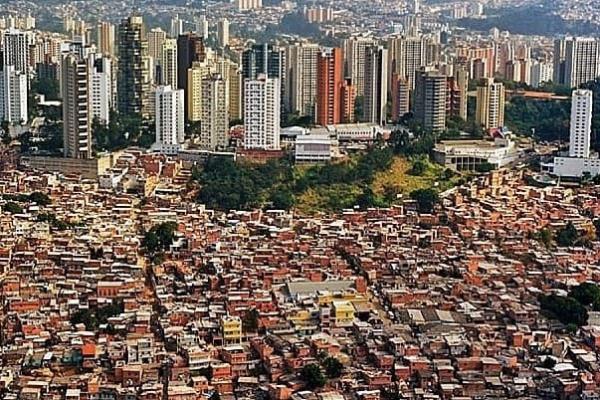
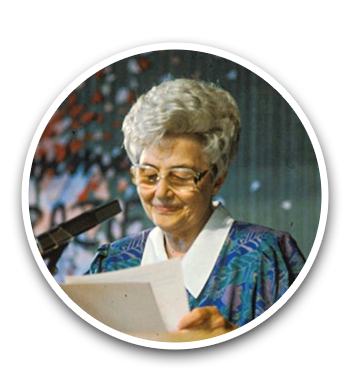
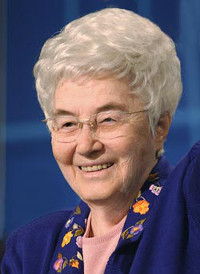
The Economy of Communion (EOC) involves entrepreneurs, workers, managers, consumers and financial operators. It was launched by Chiara Lubich in May of 1991, in Sao Paolo, Brazil, with the aim of building and showing a human society where, following the example of the first Christian community in Jerusalem, "no one among them was in need".
Italy, Incisa Valdarno (FI), 16-19/09/2010
Written by Antonella Ferrucci Thursday, 29 July 2010 12:11
Loppiano Lab is coming up, from September 16-19
A Panorama of the Events of the 2010 EoC Expo and Convention: work in progress!!
The preparations are fervering for the 4-day Loppiano Lab in September, during which the most significant moments for the Economy of Communion in Italy for 2010. We suggest that everyone sign up and participate!!! We will soon insert the details of the program, rich with initiatives and appointments.
Thursday, September 16, 2010
- 15:00 Opening of the Expo
- 15:30 - 18:00 Round table: Renewable energy: an economic challenge for our businesses and cities (Lionello Bonfanti Industrial Park, Sala Duccia) - Presenters: Fabrizio Giovannoni (Mayor of Incisa Valdarno) and Lorenzo Becattini (President of Toscana Energia, Florence)
- 18:00 Inauguration of the 2010 Expo
- 19:30 - 22:00 Happy Hour at the Lionello Bonfante Industrial Park
Friday, September 17, 2010
- 9:30 - 12:30 Round table: Ethical Economy and economy of communion: what are the opportunities for economic developoment? (Lionello Bonfanti Industrial Park, Sala Risana)
- 10:00 - 11:30 Meeting with the protagonists: Charis: a new proposal for the work of religious orders (Lionello Bonfanti Industrial Park, Sala Duccia) - Presenters: Luigino Bruni and Sr. Alessandra Smerilli
2010 North American Congress: an important milestone
Written by Antonella Ferrucci Thursday, 26 August 2010 18:48
The 2010 North American Economy of Communion congress took place from August 6-8 at Catholic University of America
2010 North American Congress: an important milestone
By Joan Duggan
For the first time, the North American EoC Congress was co-sponsored: the Catholic University of American in Washington, DC, partnered with the EoC association. It was a wonderful collaboration that brought together 60 people from across North America, as well as representatives from the Philippines and the Dominican Republic. Entrepreneurs, academics, teachers, students, young people and observers found a program rich with content for practitioners, for those interested in the management style of the EoC businesses, in methods of advancing the culture of an organization, in dialogue about the EoC and other models of social entrepreneurship.
The atmosphere of the meeting was wonderful, with meaningful dialogue, exchange of ideas, and exploration of how to address the challenges involved with the normal life of a business. Many of the first-time participants who came seeking a new form of entrepreneurship expressed that they discovered a culture of giving and unity that they want to deepen and make their own. There also was a depth to the
level of understanding and in the life of EoC, which was apparent in a variety of ways:the experiences of life seemed to illustrate the kingdom of God; there was a richness in the presentations that indicated a growing level of local expertise; the workshops that proposed specific challenges resulted in very active participation by all; and the reflections led by the academics put us in front of the challenges of our times and the prophetic mission of the EoC.
The dialogue continues in Caux
Written by Antonella Ferrucci Saturday, 21 August 2010 16:33
Maria Voce, invited to a convention promoted by the Swiss Foundation "Initiative et Changement", gave a presentation on the Economy of Communion
The dialogue continues in Caux
By Franco Galli
Published on cittanuova.it on August 17, 2010
Leaving Montreaux by car, immersed in a breath-taking panorama, we arrived in Caux, a small Swiss village that looks over the lake of Geneva, about 1000 meters above sea level. The
international convention, "Trust and integrity in a globalized economy", was held from August 15-17 in the town's monumental castle, which today has been transformed into a hotel. The event was organized by the Swiss foundation called "Initiative et Changement", a NGO that operates on the international level to prevent conflicts, intercultural dialogue and trust beyond differences among various social subjects. Six days of debate and elaboration, in which personalities in the world of economy, social entrepreneurship and representatives of NGOs coming from all over the world, tried to "explore new ways for a more just world economy".
Participants came from throughout the world and partook in the teaching of what was called the "spirit of Caux", synonymous to friendship, collaboration and shared effort in the walk towards universal fraternity.
In 2003, Chiara Lubich, invited by the foundation's president, Cornelio Sommaruga, presented a theme titled "Can religions be partners in the walk towards peace?" To answer the unprecedented challenges of post-9/11, Chiara affirmed that "the contribution of religions is decisive". And she continued by narrating her personal experience, the discovery of that art of loving that is rooted in the Gospel and which brings a love that does not know "any form of discrimination".
A thank-you from Sophia to the EoC
Written by Antonella Ferrucci Saturday, 21 August 2010 16:06
Every year, a good part of the profits allocated to "formation of new men and women" goes towards Sophia University Institute (around €200,000)
A thank-you from Sophia to the EoC
The thank-you letter written by the Dean of Sophia University Institute (IUS), Piero Coda, is dated June 15, 2010. Through the international commission, it is addressed to all the actors of the
EoC project.
Piero Coda writes: "While the second year of our academic life at Sophia University Institute is now concluding, a sincere gratitude has made me want to write a big thank you to the members of the international commission and all of the EoC for the decisive contribution made to the birth and beginning of our journey. I send this in the name of the entire academic community: professors, staff and students.
The enormous sum that you have given to us, starting from 2007 (the year the institute was erected), €600,000, has built the foundation of revenue that, together with the initial financing of the Focolare Movement and a consistent contribution by private donors, has made it possible to face the costs of decorating the spaces and the essential instruments for carrying ahead academic life here as a whole (classrooms, library, offices, student residences, etc.).
Besides, the great majority of our students, coming from Latin America, Africa and Asia, are not able to count on adequate financial coverage for their studies, more than that of food and lodging. A part of your contribution was, therefore, given to the supply of the necessary scholarships to these students.
Brazil – Igarassu, 4-7/09/2010
Written by Antonella Ferrucci Thursday, 19 August 2010 21:57
XI Regional Congress and study meeting on the EoC for youth at Igarassu (Pernambuco, Brazil)
Economy, Businesses and Motivational Capital
September 4-7, 2010
Mariapolis Center Santa Maria
Igarassu (Brazil)
Working for this congress has been intense and exciting because the goal what we've aimed for is a program that is as universal as possible, that looks to answer the challenges that face the "today" of the EoC. While it is the regional congress of the zone of Recife, there will also be representatives of the other Brazilian regions.
Various professors from the Catholic University and the Department of Fransinetti of Recife are involved in first person, and various institutions, like the Banca del Nordeste, the SEBRAE (National Service for Small Businesses) that will animate a session called: Perspectives on a Humanizing and Caring Economy, an attempt at dialogue with other initiatives of social and civil economy.
Video - Portrait of Margarida Ramirez De Moreno
Written by Antonella Ferrucci Monday, 16 August 2010 00:16
Portraits of EoC Entrepreneurs - A spinning mill and the culture of the "calchaquies" in Argentina. This is how the ideal of fraternity, incarnated in the working world, can be the chance for redemption for a group of women who have always been discriminated against and, little by little, to rediscover their identity and their dignity. The advantage goes towards an entire aborigine community.
"Tinku Kamayu" Business (United to Work)
By Margarita Ramirez De Moreno, Santa Maria di Catamarca, Argentina
I was born in Santa Maria, in a region at the foot of the Andes - rich in aboriginal culture but very poor. I'm a descendant of the aborigine "calchaquies", married and a mother of seven children.
I was the first diplomat to come from the Scuola Aurora of Santa Maria di Catamarca, recognized by the Argentinean government after 35 years of activity for its great educational contribution, as it also offers the study and recuperation of the techniques and symbols of the "quechua" culture. It was in that school that I met the Ideal of Fraternity, which I have chosen as the guiding compass of my life.
In 2003, faced with rampant unemployment, I started a spinning mill to supply the sewing lab at the school. It wasn't easy to convince the women of my land, who had always been discriminated, to take up the work of spinning again. To get to the mill, they would have to cross rivers and walk kilometers each day.
REDEC has begun
Written by Antonella Ferrucci Thursday, 05 August 2010 16:41
Presented last June 26 in Rio de Janeiro
The electronic scientific journal of the Economy of Communion, REDEC, has begun
REDEC began through the initiative of a group of scholars who focus on the Economy of Communion in part of their research, in collaboration with the "Filadelfia" Center of Study, Research and Documentation of the EoC (Mariapolis Ginetta - Sao Paulo - Brazil). The goal of REDEC is to contribute to the development of a theoretical approach inspired by the Economy of Communion (EoC): the scholars involved come from various areas of study and gives REDEC a multidisciplinary characteristic.
The journal, which can be found at www.clfc.puc-rio.br/redec/index.html, proposes itself as a space for dialogue among scholars, with the intent of creating a network among researchers who dedicate themselves to delving into the EoC and the study of other similar experiences.
Scholars who would like to contribute can do so by sending papers, reflections, thematic forums, interviews, debates and reviews to the editor, Prof. Dr. Roberto Cintra Martins. Articles that will be published in issue N.2 must be submitted by August 30, 2010, to the following email address: redec@puc-rio.br
For more information, contact the “Filadelfia” Center by writing to: centrofiladelfia@terra.com.br
The entrepreneur and poverty
Written by Luigino Bruni Saturday, 26 June 2010 07:47
The entrepreneur and poverty
Luigino Bruni
From "Economy of Communion - a new culture" N.31 - May 2010
"Blessed are the poor" is one of the phrases of the Gospel that is addressed to everyone, as are all phrases of the Gospel. There is beatitude, blessedness, in poverty. But what kind of blessedness, and why?
It´s clear that not all conditions of life which we call poverty, either yesterday or today, are blessed or happy. In fact, the poverty of exclusion, of both present and future radical insecurity, the absence of rights and of freedom, are certainly not happy states. So then, what kind of poverty is or can become a beatitude?
I believe that there is a condition, mostly spiritual, that impedes us from feeling secure and self-sufficient without having to depend on anyone and anything. When we no longer feel fragile and needy of help, when a bank account and secure job give us (or promise us) self-sufficiency and independence from others, then we are no longer those poor that the Gospel calls "blessed".
Ten Years of Tergon
Written by Giuseppe Argiolas Friday, 25 June 2010 15:28
Years that have been anything but comfortable, but yes, happy, in this "multicultural" business
Ten Years of Tergon
By Giuseppe Argiolas
From "Economy of Communion - a new culture" N.31 - May 2010
Waldemar Silfest, previously a bank director, and Georg Endler, with experience in the office furniture business, are among the founders of the business that began around 2000, initially with 200,000 Swiss francs from about 100 shareholders, residents of Germany, Switzerland, Italy, Eqypt and Romania.
The formula chosen was that of a financial institution, Tergon Spa, which would place the necessary capital at the disposal of the operative company, Tergon Srl, to carry out the production of high-standard ergonomic chairs.
Right away, founders decided that the business would adhere to the Economy of Communion project. Georg Endler remembered, "In Tergon Srl´s statutes, we decided that profits would not only serve for business development and earnings for Tergon Spa shareholders but also to help those in need and to support the School of formation at Montet."
Montet is the international small town of the Focolare Movement located in Switzerland, begun with the special purpose of forming youth and the less young to a culture of communion. The business is located in Montet to offer a paid job to the youth that stay there for around a year.
Trust and Dialogue
Written by Anouk Grevin Friday, 25 June 2010 10:49
In Dealing with Communion in Business, how to go against "management-itis"
Trust and Dialogue
By Anouk Grevin
From "Economy of Communion - a new culture" N.31 - May 2010
I'm doing a doctorate in Management at the University of Nantes and am part of an interdisciplinary research team that studies the impact of the multiplication of new managing instruments on the suffering or well-being of workers. We carry out research with a "action-research" qualitative approach, that is, consulting, requested by the directors of the businesses studied.
We carry out interviews with all employees, of every type and level. Initially, we observe their work, and then after having analyzed the gathered data, we present a picture of the situation to a group of managers and selected employees to look for suitable solutions together. Right now, my job is to study organizations in the health sector: clinics, treatment centers, etc.
What emerged from the first two organizations that we studied was the cry of workers highlighting how there is no longer any communication. Everyone underlined the lack of listening. Employees tell us that managers are so busy that they no longer see the work they carry out, the problems they meet.
And yet, leaders do everything to communicate, to develop participative management, with many meetings and group work. But in the end, there is no dialogue. An abundance of information has taken the place of communication, of relationship.
Economic development, civil society and fraternity
Written by Antonella Ferrucci Friday, 23 July 2010 14:37
Our trip in Bolivia continues. Next step, La Paz.
Economic development, civil society and fraternity
After the conclusion of the EoC Congress on July 18th, on Monday, July 19, the trip continued from Santa Cruz to La Paz. La Paz is a city which is 3800 meters above sea level and is the capital of Bolivia. Close by, 4000 meters away, another city called El Alto can be found, numbering another million inhabitants.
On Tuesday, the 20th, the program presented an important event strongly encouraged by the Nuncio of Bolivia, Mons. Giambattista Diquattro. Luigino Bruni held a conference called "Economic development, civil society and fraternity". The afternoon was organized by the Bolivian Bishops' Conference with the collaboration of the Focolare Movement, Caritas Bolivia, the Jubilee Foundation and the Conference of Bolivian Religious.
Among those present, over 140 people, there was also the vice minister of the government, university professors, bishops,
students, entrepreneurs, members of NGOs, workers of microfinance and of the World Bank.
Luigino Bruni centered his talk on Benedict XVI's last encyclical, Caritas in Veritate, underlining its historic value, above all when he affirmed that gift and gratuitousness have reasoning all their own to being "within" the market. He then proposed a few ways to promote sustainable development. Finally, he underlined the importance of "new" entrepreneurs within civil life - ones that know how to put their profits in common.
What followed was an exchange of very enriching questions and answers in which the
"how" to start micro-businesses in the spirit of gift and gratuitousness was addressed. They also dealt with promoting development based on the synergy between state, business and families. Finally, answers underlined the importance of the principle of subsidiarity in reaching an authentic development.
The atmosphere between those present was very beautiful. Luigino Bruni, greeting those who were there, affirmed to have found in Bolivia a very significant "fabric of communion" which should be cared for and made to grow. He expressed his wish that Bolivia, having all the preconditions, is really able to offer the world a model of alternative development.
The EoC "takes off" from Santa Cruz de la Sierra
Written by Lucas Cervino Thursday, 22 July 2010 15:53
In a crescendo of intensity and depth, the international Latin American EoC congress concluded
The EoC "takes off" from Santa Cruz de la Sierra
From our correspondent Lucas Cerviño
On Saturday, July 17, the 2010 Bolivian EoC congress got to the heart of things: after the first afternoon of presentations on the EoC to the city, the two following days were dedicated to people with a direct link to the Economy of Communion. The day
began with Luigino Bruni presenting the video of Chiara Lubich's report to the international congress of the Economy of Communion in 2004, in which Chiara describes the goals of the EoC and the culture of giving.
Next, there was a dense exchange of experiences from various entrepreneurs: some microcredit projects in Bolivia (Jorge and Reina Gutierrez from La Guardia, Jhenny Arancibia from La Paz); Paco Toro, Spain; Monica and Pablo Zalazar, Margarita Moreno, Argentina; Rafael Gonzales, Ecuador. Besides sharing about the spirit that is lived in the EoC, these entrepreneurs presented their business's accounts with data in hand, with invoices and profits, all in the goal of being able to weigh how the development of the business is going. A common denominator among these experiences was the "emotion" with which they were shared. It reflected the depth of these experiences, the commitment and the journey taken through the most varied difficulties.
In the afternoon, participants worked in groups. Two groups of entrepreneurs focused on the ID card of the EoC; a third group gathered EoC scholars; and a fourth group, made of youth, addressed their questions and requests to have a chance to speak more with Luigino Bruni about various aspects of the project, such as: "How can you find a balance between the needs of the entrepreneur's family and those of the business?" "What distinguishes Gospel-based poverty and situations of poverty?" "How can we not remain "closed" in our environments since the EoC is made for the world?" Luigino Bruni concluded underlining the importance that everyone, especially youth, find his own "diamond", that specific vocation to which each is called, to not settle for "crumbs" and to "aim high".
Bolivia 2010: the future of the EoC will come from here
Written by Antonella Ferrucci Saturday, 17 July 2010 22:16
The 2010 International Meeting began in Santa Cruz de la Sierra, in the Eastern-tropical region of Bolivia
Bolivia 2010: the future of the EoC will come from here
By Antonella Ferrucci
It is three-o'clock in the afternoon of July 16 when the 2010 international meeting of the EoC in Bolivia begins in Santa Cruz de la Sierra. It will take place until Monday, July 19, more than 70 participants, entrepreneurs and scholars, mostly from Bolivia, with representatives from Paraguay, Peru, Mexico, Ecuador, Argentina, Chile, Spain and Italy.
The gathering begins with an open day meeting for all who are interested, about 100 people. The goal of this first afternoon was to introduce the experience of some entrepreneurs and scholars that adhere to the EoC project to the people of this city, who are considered the economic motor of the country. After the introduction given with the video "Economy and Communion Meet", various entrepreneurs shared their experience as EoC entrepreneurs. Maria Elena from Paraguay, Germán Jorge from Argentina, and Remberto Quina from Bolivia gave different angles on how, in EoC businesses, the human person should truly be at the center and be held in great value.
During the second part of the afternoon, various EoC experts made presentations. Luigino Bruni from Italy, Javier Espinosa from Spain, Ramon Cervino and German Jorge from Argentina all answered questions of those present. Among the topics addressed were the contribution of the Economy of Communion to the economic world, the encyclical Caritas in Veritate, and the way in which fraternity can be lived in businesses. The answers given touched those who were present, both for their concreteness and for their academic depth.
The EoC Expo Express, all together to the Industrial Park!
Written by Antonella Ferrucci Monday, 05 July 2010 22:02
Xcogito, a resident EoC business of the Lionello Industrial Park, launches an interesting initiative to promote the 2010 EoC Expo
The EoC Expo Express, all together to the Industrial Park!
By Antonella Ferrucci
The idea is that of a web site, www.edcexpoexpress.it, which is an informational and logistical instrument for all who will participate in the Expo 2010 (September, 16-19, 2010). It is both a means of promotion, information and diffusion, all at once. Through the site, people can register to travel together in buses to the Industrial Park from various Italian cities. One can also get the latest information on details of the program and various events, and on single-day and mult-day participation, with the necessary forms and costs. The site is stylish and youthful. It has news, comments and even a nice calendar that counts down how many days are left until the 2010 Expo.
To better understand the spirit of this initiative, we asked Andrea Baldas, of Xcogito, a few questions:
Andrea, how can you explain why you started the EoC Expo Express?
Well, there are many possible reasons. First of all, the trip is a precious chance to share different experiences on the economy of communion and on civil economy in general. In the hours of the trip, it will be possible to talk to entrepreneurs, teachers, parents and students on the expectations they have about the program and topics of the Expo in an informal way. It is definitely more beautiful and enriching to travel together, to reach the Expo, and, actually, going by bus rather than by car is a choice to respect the environment.
An opportunity in the risk
Written by Vittorio Pelligra Sunday, 27 June 2010 18:27
The "pearl" according to the entrepreneur of the Economy of Communion project
An opportunity in the risk
By Vittorio Pelligra
Published in Città Nuova n.12/2010 of June 25, 2010
"The kingdom of heaven is like a merchant searching for fine pearls. When he finds a pearl of great price, he goes and sells all that he has and buys it"
Of course, we are all that merchant that sells everything he has to acquire a precious pearl, but in a simpler interpretation, that I also like, it is the model of the true entrepreneur who sees an opportunity in the risk rather than seeing a paralyzing cost.
In the parable of the pearl, differently than that of the "treasure in the fields" in other verses, what is underlined is the idea of the "diligent search". While the treasure is stumbled upon by chance, the finding of the pearl is the fruit of active searching and of the ability of the merchant to glimpse in that object something that others were not able to recognize.
It is the entrepreneur who uses ingenuity, who dares for a greater good which is not only profit, but also the work that creates, the well-being that spreads, the quality of life of his clients. What come to my mind are the social entrepreneurs or those of the Economy of Communion project: passionate people, dedicated, who place their own talents at the service of others to contribute to a collective good and promote the quality of life of their community.
More Articles...
Page 1 of 2
«StartPrev12NextEnd»Towards Brazil 2011: a survey!
|
Events in Italy
- Italia - Incisa in Valdarno, 8-12/09/2010
- Italy, Incisa Valdarno (FI), 16-19/09/2010
- Entrepreneurs and Innovators
- Italia - Milano, 22/06/2010
- Italy - Ostuni (BR), July 7-11, 2010
- Italia - Fano (PU), 25/06/2010
- Italia - Senigallia (AN), 21/06/2010
- Italy - Incisa Valdarno (FI), 17/06/2010
- Italia - Firenze, 10/06/2010
JCal Pro Mini-calendar
The New EdC Website in French
|
Press reviews
In the Forefront
|
EdC newsletters
sub menu
Economy and Communion Meet
EoC Newsletter N.31
| ||||
2009 EoC Destinations Report
| ||
Use the right browser!
|
who´s online
latest news
- 2010 North American Congress: an important milestone
- The dialogue continues in Caux
- A thank-you from Sophia to the EoC
- Brazil – Igarassu, 4-7/09/2010
- Video - Portrait of Margarida Ramirez De Moreno
- Chile - Santiago, 19/08/2010
- Brazil - Sao Paulo, 20/08/2010
- Profit or the common good?
- REDEC has begun
- Video - The idea of community in business behavior
- Video - Tele Libertà News Report 25/05/2010
- Italia - Incisa in Valdarno, 8-12/09/2010
- Video - Economy: civil or uncivil. Tertium non datur.
- Video - Portrait of "L'Arcobaleno "
- Italy, Incisa Valdarno (FI), 16-19/09/2010
- USA - Washington, 6-8/08/2010
- Economic development, civil society and fraternity
- The EoC "takes off" from Santa Cruz de la Sierra
- Bolivia 2010: the future of the EoC will come from here
- Video - Presentation by Maurizio Baussola in Piacenza

There are two events being prepared in Brazil for this important moment:

An entrepreneur with an extraordinary inventiveness - so much so that he contributed 35 new patents - François Neveux (1936-2006), from the moment of his working debut, lived out his work activity with a not so common attention to interpersonal relationships.